
As technology becomes a critical component of business success, many companies face difficulties in managing their IT systems and maintaining operational continuity. With the rising risks of cyber threats and the need for continuous updates and support, the role of a Managed Service Provider has never been more crucial. But what is a Managed Service Provider (MSP)?
An MSP is an extension of your business’s IT team that helps by providing expertise, resources, and services to keep your IT systems running smoothly and securely. Regardless of the scale, companies and enterprises have become deeply dependent on technology.
To optimise operations, elevate efficiency, and attain their goals precisely, they opt for the significance of Managed Service Providers (MSPs). So, how do you know if you need a managed service provider? And most importantly, how to choose an MSP for your business? Keep learning to find out!
What is an MSP?
In simple terms, an MSP refers to outsourced IT services. It is a third-party company that manages IT infrastructure, end-user systems, and critical business operations such as cybersecurity, data backup, and cloud management. Unlike traditional “break-fix” models, MSPs offer proactive, continuous support to improve efficiency, security, and uptime.
Modern MSPs also extend beyond IT, offering services like staffing, payroll management, customer engagement, and vendor coordination to meet broader business needs.
Key Takeaways:
✔️MSPs act as an extension of your IT department, delivering specialised expertise and 24/7 monitoring.
✔️They operate on a proactive model, preventing issues rather than responding after failures.
✔️Services are typically delivered under a predictable subscription-based model backed by a Service Level Agreement (SLA).
✔️MSPs help businesses reduce costs, enhance cybersecurity, and focus on core operations.
What are the Role of MSPs?
The primary function of an MSP is to act as an external IT department or third-party technology partner, taking responsibility for managing, maintaining, and anticipating the IT needs of a business. This approach allows organisations, particularly small and medium-sized businesses (SMBs), to focus on their core operations and stay competitive in the market while leaving the intricacies of IT management to the experts.
Common MSP Programs include:
- Hiring different types of temporary and project-based workers.
- Building pools of high-quality candidates.
- Reviewing current supplier and vendor contracts.
- Managing contracts.
- Providing reporting and analysis about the temporary workforce.
- Overseeing the companies that supply these temporary workers.
- Handling the bills and payments for the staffing companies.
- Advising about important job market trends.
- Teaming up to create special workforce plans that match what the client needs.
How Do Managed Service Providers Work?
Managed Service Providers (MSPs) operate through a proactive approach. They monitor IT systems around the clock, identifying and addressing potential issues before they escalate into major problems. Their tasks include like:
- Project Management: MSPs drive and manage projects, ensuring resource allocation, schedule adherence, and budget control. They utilise tools like remote monitoring and management (RMM) for effective project tracking.
- Auditing and Assessment: MSPs conduct thorough audits of existing IT systems to identify strengths and weaknesses. This assessment guides them in implementing suitable solutions and support strategies.
- Integration Expertise: MSPs understand the intricate relationships between technology and critical systems, offer advice on best practices, and assess the impact of various support activities on overall operations.
- Strategic Guidance: MSPs provide strategic insights, helping businesses align technology with their goals and objectives. They offer guidance beyond mere task execution.
- Compliance Assurance: MSPs aid in solution design and management in compliance-driven industries to ensure businesses adhere to regulatory standards while utilising technology effectively.
- Process Enhancement: MSPs evaluate existing environments to suggest improvements and automation opportunities, enhancing overall operational efficiency.
- Supporting Business Initiatives: Beyond routine support, MSPs assist in achieving business objectives. They understand your goals and leverage technology to advance initiatives effectively.
Each of these functions showcases the depth and value that MSPs bring to businesses by managing technology and strategically contributing to their growth and success.
Types of Managed Service Providers
Based on the scope of services, technology focus, and industry specialisation, Managed Service Providers (MSPs) are categorised into three main groups: Specialised IT-Centric Services, General Managed Services, and Industry-Specific MSPs.
1. Specialised IT-Centric Services
This category includes MSPs focused on managing core technology infrastructure, cybersecurity, and end-user computing. These services are typically the most commonly associated with MSPs today.
|
MSP Services |
Functions Provided |
|
Managed Security Service Providers (MSSPs) |
Managed security services include firewalls, antivirus solutions, vulnerability management, SOC operations, and 24/7 monitoring. |
|
Managed Cloud Services |
Managed cloud services include cloud transformation, hybrid cloud, cloud storage, SaaS, and platform services like Azure and public/private cloud solutions. |
|
Managed Infrastructure |
Management of storage systems, servers, and network environments, including network monitoring, virtualisation, and IT infrastructure management. |
|
Data & Disaster Recovery |
Backup, data recovery, and creating disaster recovery plans, along with cloud replication and storage management. |
|
Managed End User Computing |
Support for desktops, laptops, mobile devices, and level 1 support through a Managed Service Desk. |
|
“Pure-Play” MSPs |
MSPs that specialise in a single vendor or technology, offering expertise in their core offerings. |
|
Strategic/vCIO MSPs |
Provide IT consulting, strategic technology alignment, and act as a virtual CIO (vCIO) for businesses. |
2. General Managed Services (Non-IT Focused)
These MSPs manage business functions beyond traditional IT services, focusing on improving operations and reducing costs across various industries.
|
Type of Service |
Functions Provided |
|
Supply Chain Managed Services |
Supply chain planning, logistics, procurement, and distribution management. |
|
Transportation Managed Services |
Daily transportation planning, freight auditing, and accounting/payment. |
|
Marketing Managed Services |
Marketing strategy, planning, SEO, social media, web design, and advertising services. |
|
Utility/Infrastructure Services |
Management of water quality, storage, smart irrigation, and smart grid deployments. |
|
Business Process Automation |
Robotic Process Automation (RPA), digitisation, automated invoicing, and digital mailroom services. |
|
Outsourcing Services |
Non-IT functions include mailroom management, records management, and executive concierge. |
3. Specialisation by Industry (Vertical MSPs)
Some MSPs specialise in industries with specific regulatory, compliance, and technology requirements. These MSPs provide tailored services to meet industry-specific needs.
|
Industry Specialisation |
Example Services/Needs |
|
Financial Services |
Services to meet regulations, cybersecurity, and compliance requirements. |
|
Healthcare |
Focus on regulatory compliance, data protection, and Electronic Health Records (EHR). |
|
Government & Public Sector |
Managing infrastructure, improving data accessibility, and achieving cost containment through cloud services. |
|
Real Estate |
Managed services for property management, real estate transactions, and data management for real estate agencies and property developers. |
|
Insurance |
Services focused on claims management, customer data security, compliance, and policy automation for insurance companies. |
|
Legal Services |
Tailored services addressing compliance and security for law firms. |
Why Should Your Business Use an MSP?
Small to medium-sized businesses (SMBs) are typically managed service provider customers. Many smaller companies have limited in-house IT capabilities, so a managed service provider can be a great way to obtain additional IT expertise.
The in-house staff is generally responsible for various tasks, from installing and configuring new systems and software to providing technical support across the organisation. However, their proficiency in handling these responsibilities may vary, leading to a potential need for supplementary personnel.
Expanding the workforce comes with heightened expenses and involves a sequence of tasks encompassing candidate exploration, interview procedures, and the subsequent training of chosen individuals.
Hence, other than cost, there are many other advantages to working with MSPs and outsourcing your businesses’ day-to-day IT operations to the right provider.

Benefits of Working with an MSP
MSPs will offer you the following benefits:
- Expertise: MSPs possess specialised knowledge and experience in various IT domains, ensuring your technology infrastructure is in capable hands.
- Cost Efficiency: Outsourcing IT management can be more cost-effective than hiring an in-house team, especially for SMEs.
- Scalability: MSPs offer flexible solutions that can scale as your business grows, ensuring you have the necessary resources without overburdening your budget.
- Focus on Core Business: By offloading IT responsibilities, your team can concentrate on strategic business initiatives.
- Enhanced Security: Cybersecurity-focused MSPs can implement robust measures to protect your sensitive data from evolving threats.
Is MSP the Right Choice for You?
While MSPs offer numerous advantages, it’s essential to evaluate whether they align with your business needs and goals. Consider factors such as the complexity of your IT infrastructure, budget constraints, and the potential benefits of outsourcing IT management.
How to Choose the Right Managed Service Provider: MSP Selection Checklist
🪗 Define IT Needs: Clarify required services (e.g., cybersecurity, cloud support).
🪗 Check Expertise: Look for relevant industry experience and certifications.
🪗 Review SLA: Confirm support expectations, uptime, and response times.
🪗 Ensure Security: Verify data protection practices and compliance (e.g., GDPR, HIPAA).
🪗 Understand Pricing: Choose a clear, predictable pricing model (per-user, per-device, flat-rate).
🪗 Check References: Ask for case studies or references from similar businesses.
🪗 Evaluate Support: Ensure responsive support with 24/7 access or dedicated contacts.
🪗 Confirm Scalability: Ensure the MSP can grow with your business needs.
🪗 Check Disaster Recovery: Ensure backup and disaster recovery solutions are in place.
🪗 Assess Long-Term Fit: Ensure the MSP aligns with your business goals and innovation.
Challenges of Managed Services Providers
Despite their benefits, working with MSPs has challenges like communication issues, data security concerns, and potential dependency on external vendors. You must choose a reliable and transparent MSP to mitigate these challenges.
- Dependency on third-party vendors and integration issues with existing systems.
- Data privacy and control concerns.
- Contract limitations and SLA misalignment.
- Hidden costs, unclear pricing structures, and delayed billing practices.
- Cloud computing shift and complexity, coupled with a lack of cloud expertise.
- Transitioning business models from traditional sales to managed services.
- Managing the complexity of evolving IT systems while ensuring security.
- Perceived lack of value from MSPs (seen as expensive with minimal benefit).
- Operational deficiencies, such as using generic processes or third-party software.
- Handling IT crises, such as data breaches and system failures.
What is the Pricing Model for Managed Service Providers?
Managed Service Providers (MSPs) typically operate on a subscription-based pricing model, which delivers cost predictability for businesses. Clients pay a flat or near-fixed monthly fee for comprehensive IT support, which transforms variable capital expenses (CapEx) into predictable operational costs (OpEx). Pricing models for MSP services are clearly outlined in a Service Level Agreement (SLA).
Common MSP Pricing Models
1. Per-User Pricing Model
- Flat fee per user: Clients pay a fixed fee for each end-user, regardless of the number of devices they use.
- Comprehensive coverage: The fee covers all IT services for the user, including support, updates, and monitoring.
- Cost Example: In Australia, MSP pricing typically ranges from $100 to $250 per user per month, depending on the scope of services provided.
2. Per-Device Pricing Model
- Fee per device: Clients pay a fixed fee for each device (e.g., desktop, laptop, or mobile) managed by the MSP.
- Simplicity: This model is straightforward and easy for both the client and the MSP to understand and manage.
3. All-Inclusive or Flat-Rate Pricing Model
- Single monthly fee: The client pays one fixed monthly fee for all IT services, including monitoring, support, security, and maintenance.
- Predictability: This model offers businesses a simple, transparent billing process without any surprises or hidden fees.
4. Tiered Pricing Model
- Different service levels: This model offers multiple tiers of service, with each tier priced differently based on the scope of services.
- Basic to advanced: Lower tiers may include basic monitoring, while higher tiers might offer full security services, advanced support, and strategic IT consulting.
Additional Fees
Setup or Transition Fees: Most MSPs charge an upfront fee when onboarding a new client, covering initial setup, system assessments, or transition services. This is typically a one-time charge, in addition to the ongoing monthly service fees.
Comparison to Traditional IT Models
MSP pricing contrasts sharply with the traditional “break/fix” model, where clients only pay for IT services when issues arise:
- Proactive vs. Reactive Cost: With MSPs, the subscription model ensures consistent monthly charges, helping businesses plan and budget for their IT needs. Traditional IT services, on the other hand, charge based on incidents, which can lead to unpredictable costs depending on the number of issues that need fixing.
- Incentive Structure: The traditional “break/fix” model often incentivises reactive support, meaning providers profit from the number of issues that occur. Conversely, the MSP fixed-fee model encourages proactive IT management, with the MSP aiming to reduce incidents and ensure long-term system reliability.
MSP vs. In-House IT Team: Key Differences
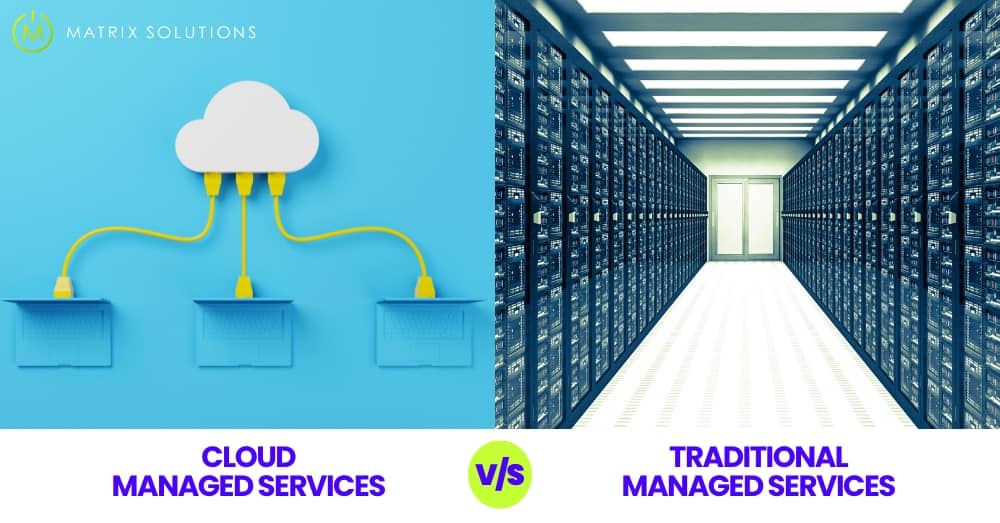
The decision between utilising a Managed Service Provider (MSP) and maintaining an In-House IT Team depends on differences in service approach, cost structure, expertise, and scalability. MSPs offer proactive management, while in-house IT departments often provide reactive support.
|
Feature |
Managed Service Provider (MSP) |
In-House IT Team |
|
Approach to Service |
Proactive: Continuously monitors and prevents issues. |
Reactive: Responds after problems arise. |
|
Cost Structure |
Fixed monthly fee with predictable costs. |
Variable costs: Salaries, benefits, and recruitment. |
|
Expertise |
Access to specialised skills (cybersecurity, cloud, compliance). |
Limited to in-house expertise and staff skillset. |
|
Scalability |
Highly scalable: Adapts quickly to business growth. |
Limited scalability: Requires significant investment to grow. |
|
Service Model |
Ongoing support with active monitoring and maintenance. |
Break/fix: Services provided when issues occur. |
|
Focus |
Frees up in-house staff to focus on strategy and growth. |
Focuses on day-to-day operations and IT maintenance. |
|
Innovation |
Brings innovative solutions and the latest technology. |
Often focused on maintaining the current infrastructure. |
|
Vendor Management |
Manages third-party vendors and integrates tools into systems. |
Relies on internal staff to manage third-party vendors. |
Your Trusted MSP Partner: Matrix Solutions

Matrix Solutions specialises in customised outsourced IT services tailored to your business’s needs. Our proficiency in document management systems such as NetDocuments, cybersecurity, and managed cloud services makes us a dependable ally for SMEs seeking access to enterprise-level technological solutions. Our commitment to excellence ensures your business’s IT requirements meet the highest standards of care and innovation. Contact us for a free consultation.
Conclusion
In conclusion, a Managed Service Provider is a valuable partner for businesses aiming to leverage advanced technology without the burden of intricate IT management. By outsourcing IT responsibilities to experts, companies can enhance productivity, security, and competitiveness in their respective industries. As the technological landscape evolves, MSPs will play an increasingly vital role in driving business success.
MSP Frequently Asked Questions
What is an MSP example?
Examples of Managed Service Providers (MSPs) include various services like:
- watching over computer networks,
- ensuring security,
- managing virtual systems,
- planning for emergencies,
- taking care of applications and technology connections
They help keep things running smoothly for businesses.
What does a Managed Service Provider (MSP) do?
MSPs handle IT management tasks such as system monitoring, updates, security, and performance optimisation.
What is the difference between an MSP and a Cloud Service Provider?
While MSPs manage various IT services of an organisation. Meanwhile, Cloud Service Providers focus on offering cloud-based infrastructures and services like IAAS, PaaS and SAAS.
What is a managed service provider in the staffing industry?
In the context of recruitment and staffing, a Managed Service Provider (MSP) is a company or entity that oversees and manages an organisation’s entire contingent workforce and staffing processes.
An MSP in recruitment/staffing simplifies complex workforce management and allows businesses to focus on their core operations while benefiting from expert talent management solutions.