



HOW WE CAN HELP
We’ll run your cloud so you can focus on clients
Ageing servers fail without warning, and the ACSC received over 84,700 cybercrime reports in FY2024–25. Matrix Solutions engineers monitor, patch, secure and back up your cloud under the same agreement as our managed IT services in Sydney.

What Are Managed Cloud Services?
Managed IT cloud services are an ongoing arrangement where a provider manages some or all of your cloud resources. The provider’s role covers day-to-day operations, security, backups and cost control. Your staff keep working in their usual applications while the provider runs the cloud computing platform underneath.
The provider in this arrangement is a managed cloud service provider (MCSP). Under a partial model, you outsource some day-to-day cloud operations, such as backup or patching, and keep the rest in-house. Under a fully managed model, the MCSP owns operations, monitoring, security and support for the whole environment.
Responsibility stays shared in both models. A cloud platform secures its physical infrastructure, while your business remains accountable for its data, user accounts and devices. A managed provider helps you manage your side of that split by enforcing access controls, monitoring activity and checking backups on your behalf. Our guide to what every business should know about managed cloud services explains the model in more depth.
What Our Managed IT Cloud Services Include
Our managed IT cloud services include cloud operations, service management, cyber security, optimisation and compliance support. Our team runs all five functions as scoped in your agreement, so problems tend to surface in routine checks, not your working day.
Cloud Operations and Monitoring
Cloud operations start with automated monitoring of server health, storage capacity, availability and performance. Alerts route straight to our engineers, who work to resolve capacity and performance issues before staff notice a slowdown. User provisioning, access changes and routine administration run through the same operations process.


Service Management, Updates and Patching
Service management covers your helpdesk requests, change control and the patch cycle for cloud servers, operating systems and core applications. We schedule patches, check each one installed correctly and record changes against the service levels in your agreement.
Cyber Security and Threat Detection
Cyber security for your cloud environment starts with a base layer of identity controls, endpoint protection and firewall management. Our managed cyber security services then add threat detection and incident response, scoped to your firm.


Cloud Cost Optimisation
Cloud cost-efficiency depends on accurate sizing. We review compute, storage and licence usage, shut down idle resources and right-size servers to your actual workload. Licence reviews catch unused Microsoft 365 seats that inflate your monthly spend.
Compliance Support and Reporting
Compliance support turns security controls into evidence. We document access reviews, backup results and patch status, then report them against ASD’s Essential Eight, a baseline set of eight mitigation strategies. Those records can also support the security steps your firm takes under the Privacy Act 1988 (Cth), where the Act covers your business. Our article on cloud governance explains how cloud policies, controls and reporting fit together.

Trusted by Professional Services Firms
We have been supporting Australian professional services firms for 30 years.





Benefits of Managed Cloud Services
Running all five managed cloud functions through one provider can give your business more predictable costs, less downtime and specialist expertise. One provider also gives you capacity that keeps pace with your headcount.
More Predictable Cloud Costs
Predictable cloud costs start with removing unplanned spend: server replacements, emergency call-outs and surprise licence true-ups. Moving servers into managed cloud replaces a large hardware purchase every few years with an ongoing service fee.


Less Downtime and Faster Fixes
Less downtime comes from fixing faults before they become outages. Acting early on alerts for failing disks, full volumes and stalled services helps keep billable hours and client work moving.
Cloud Expertise Without Hiring
Cloud expertise is expensive to hire. One in-house cloud engineer costs a full salary and still leaves gaps during leave and in specialist areas. Our managed service gives you a team of engineers and consultants instead. If you have no in-house IT, our outsourced IT services can act as your dedicated IT function.


Capacity That Grows With Your Team
Capacity grows with your team as you add new starters, new offices and new applications. In managed cloud, you can usually add users and locations without buying new hardware or waiting on equipment.
Managed Cloud Trade-Offs and How We Address Them
Managed cloud carries three common trade-offs: reliance on an external provider, less direct control over infrastructure, and the risk of unexpected costs. We address each one below, so you know where you stand before you sign.
Reliance on an External Provider
Outsourcing cloud operations means depending on another business. Our published Master Service Agreement commits us to return or delete your data when the agreement ends, and that obligation survives termination. You can read the full terms before you sign.
Less Direct Control Over Infrastructure
Handing over administration can feel like losing visibility. We record changes to your environment, and you set the priorities we work to. Our published terms spell out what we guarantee and what we cannot, including the performance of third-party cloud providers.
Unexpected Cloud Cost Increases
Consumption-based public cloud bills climb when usage spikes or resources stay running overnight. For Azure workloads, we track spend against your budget and flag unusual growth early, so a usage spike is less likely to surprise you.
Private, Public and Hybrid Cloud Services in Sydney
Each trade-off plays out differently across the three cloud solutions we manage for Sydney businesses. The three are private cloud, public cloud on Microsoft Azure, and hybrid cloud that combines the two. The right model depends on your applications, compliance obligations and budget, and plenty of firms run more than one.
Managed Private Cloud
Our managed private cloud service runs your servers, storage and applications in an environment we manage for your firm. Private cloud suits steady workloads, legacy applications and firms with strict confidentiality obligations.


Managed Public Cloud on Microsoft Azure
Public cloud on Microsoft Azure suits workloads that need fast scaling or Microsoft-native services. Our managed IT support includes administration of third-party cloud services, such as Azure resources and Microsoft 365 tenancies. For Sydney workloads, Azure’s Australia East region runs in New South Wales across three availability zones. Each zone is a separate group of data centres within the region. Our guide to public cloud compares it with private cloud.
Managed Hybrid Cloud
Hybrid cloud places steady or sensitive workloads on private infrastructure and bursty or seasonal workloads in public cloud. A law firm might keep its document management system and file shares on private cloud and run collaboration in Microsoft 365. We connect, secure and monitor both sides as one environment, and our guide to hybrid cloud explains how the model works.

Cloud Hosted Desktops With MatrixCloud
A MatrixCloud hosted desktop gives each staff member the same Windows workspace in the office, at home or on the road. Your team can reach cloud platforms such as NetDocuments and Actionstep from the same desktop, and we provide Worldox document management support. For firms moving off legacy document systems, our team implements and supports NetDocuments document management.
Managed Cloud Backup and Disaster Recovery
Managed cloud backup and disaster recovery help protect your data in all three models against hardware failure, ransomware and site outages. Our managed backup services handle backup scheduling, storage away from your servers and monitoring of backup jobs. For recovery planning, see our managed disaster recovery services.
Automated, Monitored Backups
Automated backups run on set schedules and copy to separate storage, away from the servers they protect. We monitor backup jobs and follow up failures, so a missed backup is less likely to leave a gap in your recovery point.
Defined RPO and RTO Targets
Your recovery point objective (RPO) sets how much data you can afford to lose. Your recovery time objective (RTO) sets how long systems can stay down. We help you set both targets and plan backup and replication around them. Our guide to disaster recovery as a service (DRaaS) explains how RPO and RTO shape cost.
Ransomware Recovery and Reporting
A recovery plan works only when backups are ready to restore. Clean backups can give you a recovery path that does not depend on paying a ransom.
Under the Cyber Security Act 2024 (Cth), businesses with annual turnover above A$3 million, and critical infrastructure responsible entities, must report ransomware payments to ASD. Reports are due within 72 hours of the payment, or of learning it was made for them. The duty has applied since 30 May 2025.
Cloud Migration Services in Sydney
Our cloud migration services in Sydney move your servers, files, email and line-of-business applications into managed cloud. Cut-overs are planned to keep your office working, and we map system dependencies first to reduce the risk of anything breaking after the move.

A standard migration covers four workload types:
- File shares and document stores, moved with permissions intact.
- Email and calendars, moved into Microsoft 365.
- Practice management and line-of-business applications, moved after vendor and data checks.
- Legacy servers, decommissioned or rebuilt inside MatrixCloud.
Where practical, we run old and new systems side by side until your team confirms everything works.
Timing matters for firms still running Windows Server 2016, which reaches the end of extended support on 12 January 2027. Migrating before that date helps keep the servers you rely on patched and supported.
Cloud Data Location and Compliance
After migration, you should know where each set of your data is stored and which rules apply to it. For Azure workloads, choosing an Australian region such as Australia East keeps them within Microsoft’s Australian data residency boundary.

Data Residency and Data Sovereignty
Data location answers two separate questions. Data residency describes where your data physically sits. Data sovereignty describes whose laws and controls apply to it.
If the Privacy Act 1988 (Cth) covers your business, Australian Privacy Principle 8 (APP 8) governs disclosing personal information to overseas recipients. Storing data with an overseas cloud provider may or may not count as a disclosure, depending on how much control you keep.
Privacy Act and Essential Eight Support
The Privacy Act 1988 (Cth) covers Australian Government agencies and businesses with annual turnover above A$3 million, plus some smaller businesses. Covered businesses must take reasonable steps to protect personal information under Australian Privacy Principle 11 (APP 11).
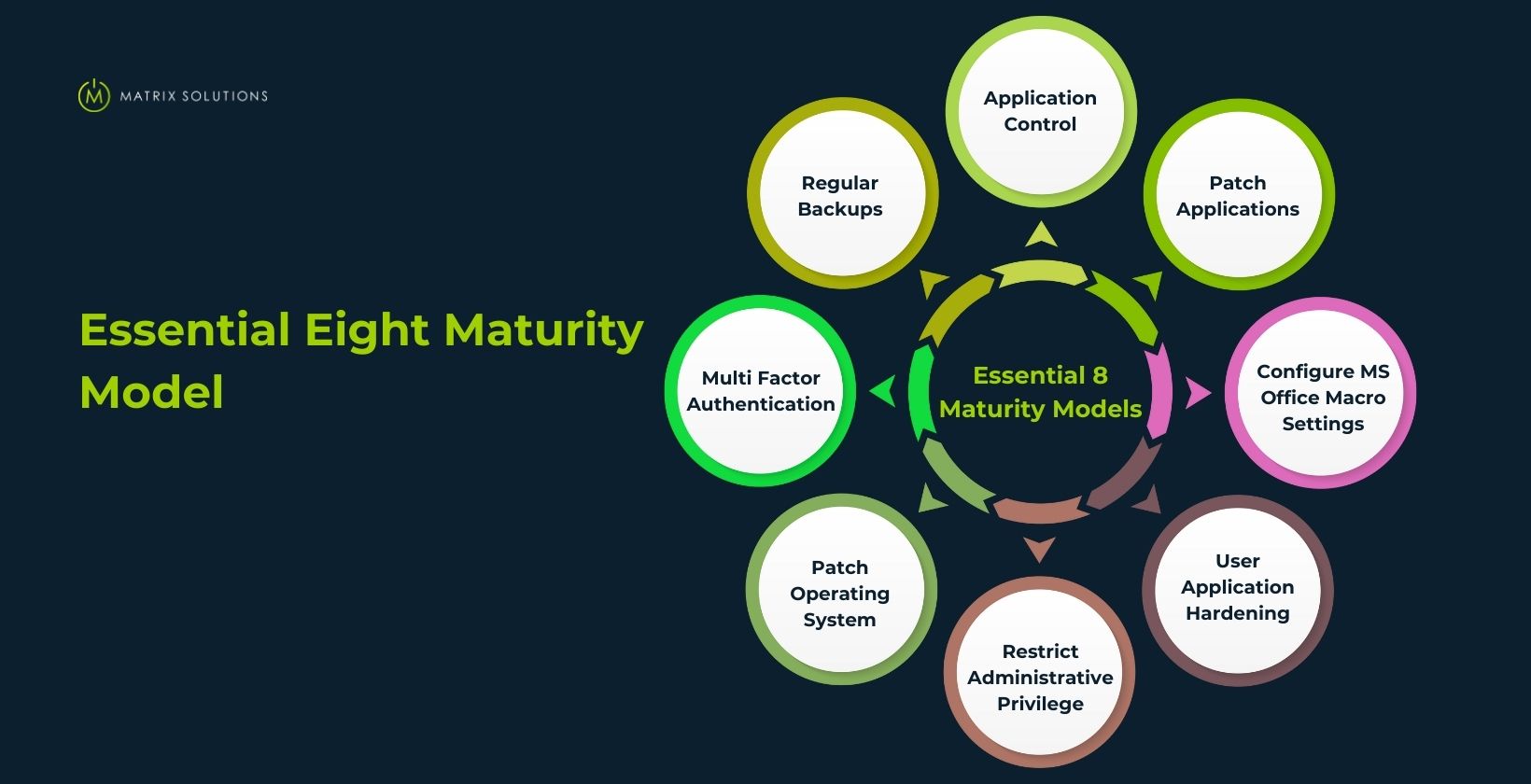
We can assess your cloud environment against ASD’s Essential Eight maturity model and help you apply its controls. These include patching, multi-factor authentication (MFA), restricting administrative privileges and regular backups.
Entities regulated by the Australian Prudential Regulation Authority (APRA), including insurers, must also meet Prudential Standard CPS 234 Information Security. CPS 234 also covers information assets managed by related parties and third parties.
Industry-Specific Managed Cloud Services
We build managed cloud environments around the systems and obligations of each sector we support. Every industry below relies on confidential data and dependable access, and each one runs a different application stack.
Law Firms
Law firms hold privileged client files and document-heavy matters, which makes ransomware and unauthorised access serious risks. We restrict matter data with identity and access controls and back up the document systems in your environment. Fee earners can use the same hosted desktop in the office, at court or at home.
See our managed IT services for law firms.
Real Estate Agencies
Real estate agencies run on a few core platforms, such as PropertyMe, Console Cloud and REI Forms Live. We plan how your team reaches them in the office and in the field.
See our managed IT services for real estate.
Insurance Companies
APRA-regulated insurers must meet CPS 234 and Prudential Standard CPS 230 Operational Risk Management, in force since 1 July 2025. CPS 230 covers risk from material service providers. Our reporting can support the information security evidence you keep for CPS 234.
Finance Firms
Finance firms hold tax file numbers (TFNs), bank details and confidential client financial records. The Notifiable Data Breaches (NDB) scheme applies to TFN recipients to the extent a breach involves TFN information. We plan who can access those records first, and help keep systems stable through tax time, which runs from July to October.
Additional Industries
We also support other Australian SMEs and professional services businesses, using the same managed cloud model.
Ready to strengthen your IT infrastructure and take your business to the next level? Schedule a free consultation with Matrix Solutions today. Discover how our expert Managed IT Services can improve security, boost efficiency, and support your long-term growth. Let’s build a smarter, more reliable IT strategy together.
Why Choose Matrix Solutions for Managed Cloud Services in Sydney
Three strengths shape our managed cloud service for Sydney firms: long experience, our own hosted desktop platform and specialist legal software partnerships.
Supporting Australian Firms Since 1996
Matrix Solutions has supported Australian professional firms and SMEs since 1996. Our team brings that experience to the planning, migration and day-to-day support of your cloud environment.
One Provider for Your Desktop and Cloud
MatrixCloud is our own hosted desktop, so the provider supporting your staff also runs the platform their desktops sit on. One provider means one agreement and one team to call when something needs attention.
NetDocuments Award Winner and Actionstep Partner
Matrix Solutions is a NetDocuments Platinum Partner and a Certified Actionstep Consulting Partner. Our NetDocuments badges cover Sales Expert, Trainer, Implementation Expert and Migration Expert. In 2023, NetDocuments named Matrix Solutions its Asia-Pacific (APAC) Implementation Partner of the Year.
What Our Managed Cloud Clients Say
Hear from the firms that rely on our cloud and IT support.


How Managed Cloud Services Pricing Works
Managed cloud pricing depends on four factors: user count, the applications you run, storage and retention needs, and the security level your obligations require. Your scope sets the price, so we confirm it with you first.
Managed Cloud Services Across Sydney and Australia
We are Sydney-based and support businesses across Sydney. We also support businesses in Melbourne, Brisbane, Perth, Adelaide, Canberra and the Gold Coast.
Explore our managed IT services across Australia or speak with our team about every office you run.
Three Steps to Managed Cloud in Sydney
Moving to managed cloud follows three steps, each planned to keep your team productive.
Speak to a Cloud Consultant
Start with a free consultation with our team. We talk through your applications, your pain points and any deadlines ahead, such as ageing hardware or an upcoming audit.
Complete a Cloud Readiness Review
We assess your servers, licences, security posture and data, then recommend a cloud model in a written plan. Firms wanting ongoing strategic direction pair this review with our Virtual CIO service.
Move Into Day-to-Day Cloud Management
After migration, your environment moves into day-to-day management, with monitoring, patching, backup and security in place. Our team then becomes your day-to-day support contact.

FAQs About Managed IT Cloud Services in Sydney
The cost of managed IT cloud services in Sydney depends on your user count, applications, storage and retention needs, and security requirements. Each service has a separate costs agreement under our Master Service Agreement. Book a Free Consultation to talk through the scope for your firm.
Our Master Service Agreement, including agreed pricing, runs for three months from the date you accept the service. The agreement then renews automatically every three months. Either party can end it with at least 30 days’ written notice. On termination, we return or delete the client data we hold.
The difference between managed cloud services and cloud hosting is who runs the environment. Cloud hosting rents you servers and storage, while your team handles patching, security and backups. Managed cloud services transfer those tasks to a provider, which runs them under a service agreement.
Yes, we can take over a cloud environment another provider set up. We put our tooling, monitoring, support processes and security baseline in place, then address the most urgent risks first. We document access rights, backups and licences as part of the same handover.
Your cloud systems keep running when your office internet goes down, because your data and applications sit in the cloud, not the office. Staff can reconnect from home, another site or a mobile hotspot. Offices that cannot afford an outage can add a backup internet service with automatic failover.
To choose a managed cloud provider in Australia, compare five criteria before signing:
- Data location for every workload.
- Security controls, such as ASD’s Essential Eight.
- Response and resolution times written into the service agreement.
- Exit terms covering data return and deletion.
- Local engineers who know your environment.
No, most businesses do not have to meet the Essential Eight unless a regulator, government policy or client contract requires it. The Australian Signals Directorate (ASD) recommends it to organisations as guidance. Ask your regulator or largest client which maturity level, if any, they expect.
The main cloud service providers in Australia are Amazon Web Services (AWS), Microsoft Azure, Google Cloud and Oracle Cloud Infrastructure. Each one operates cloud regions in Sydney and Melbourne, which support in-country disaster recovery. We administer Microsoft Azure workloads alongside the MatrixCloud hosted desktop.
Yes, you can keep some servers on-site with managed cloud. Firms often keep one local server for scanning workflows, large files or a latency-sensitive application. We monitor, patch and back up that server under the same agreement, and our hybrid cloud strategy guide explains how to split workloads.
Yes, Microsoft 365 works with a MatrixCloud hosted desktop, including Outlook, Word and Excel. Shared hosted desktops need a licence that supports shared computer activation, such as Microsoft 365 Business Premium. Business Standard does not qualify. We check every user’s licence type during the cloud readiness review.
No, you don’t always need new computers before moving to the cloud. Hosted desktops run in the cloud, and existing PCs work as access devices. Windows 10 support ended on 14 October 2025, so each PC should run Windows 11 or be covered by Microsoft’s paid Extended Security Updates.
A move to managed cloud takes longer as user count, data volume and the number of applications grow. Email and file shares move fastest. Line-of-business applications take longest, because each one needs vendor checks, data validation and user testing before cut-over. Your readiness review plan sets out the timeline.
Book Your Free IT Consultation
Moving your business to managed cloud starts with a clear view of what you run today and where it is heading. Book a free consultation to talk through your servers, applications, security controls and support arrangements with our team.
Contact us on 1300 556 430 or fill out the form to speak with our team about managed IT cloud services for your firm.
Ready to strengthen your IT environment?
Team Members
Our Award-Winning Team
When you partner with Matrix Solutions, you work with an experienced team that designs, migrates and runs your cloud environment. Our key people include:


To learn more about the key people behind Matrix Solutions. Let’s connect you with our experts.
Featured Resources

Managed IT Solutions Info Pack
Matrix Solutions provides tailored hosted desktop and network management solutions to professional firms.
-
Customer service automation
-
Personalized email campaigns
-
Landing page creation

Cloud Security Check List
Enhance your online security with Matrix Solutions’ Cyber Security Checklist resources. Protect your digital assets effectively.
-
Enhanced engagement
-
User-generated content
-
Competitive advantage

Cyber Security Check List
Strengthen your cloud security with Matrix Solutions' Cloud Security Checklist resources. Safeguard your data effortlessly.
-
File sync and sharing
-
Automatic backup
-
File recovery